Happy with Less: A Kinder Approach to Portion Control
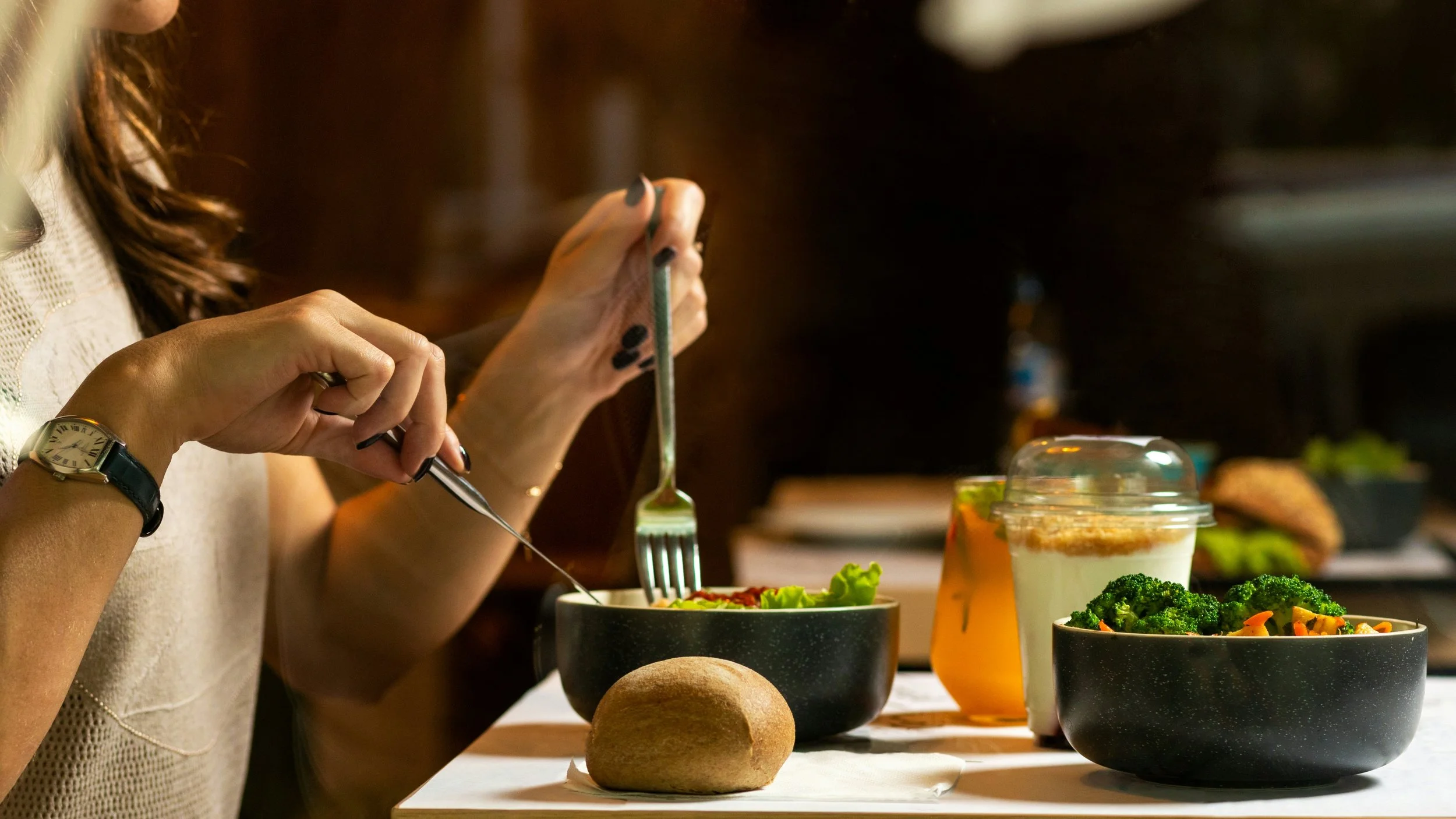
Photo by Farhad Ibrahimzade on Unsplash
Learning to Be Satisfied With Less: A Kinder Approach to Portion Control
How often do you find yourself finishing a meal and thinking, “I’m full … but I could still eat more”?
Or opened a bag of chips, poured a generous bowl of cereal, or grabbed a second helping almost automateuically—only to realize afterward that you didn't really need it ( queue ‘eater’s remorse’)?
If so, you're not lacking willpower.
You may simply have not learned and reinforced the skill of being satisfied with an amount of food that is enough for your body.
And that is a skill worth developing—especially if you're trying to lose weight, improve your health, or simply feel more in charge of your daily food choices.
Portion control doesn't have to mean eating tiny portions
For many women, even encountering the phrase portion control conjures images of dieting: measuring cups, food scales, calorie counting, tiny servings and feeling deprived.
That's not what I'm talking about.
I'm talking about moderation and satisfaction (and yes, they are not mutually exclusive).
There's a difference between:
“I can't have very much.”
and
“I can enjoy this food, have enough to satisfy me, and stop before feeling overly full.”
That second mindset is much more sustainable.
Why "just eat less" doesn't work very well
If you've spent years dieting, you may have developed an all-or-nothing relationship with food.
You restrict.
You get hungry.
You eventually eat more than you intended.
You feel guilty and maybe even a bit shameful.
You decide you need to "be good" tomorrow.
And the cycle starts again.
The answer isn't more restriction.
Instead, we can build the ability to eat enough to be satisfied without automatically eating until we're stuffed.
That requires awareness, practice and patience.
Your eyes often eat before your stomach does
We're surrounded by food cues that encourage us to eat more.
Large restaurant portions
Family-size packages
Bottomless refills
"Buy one, get one" deals
Snacks sitting on a desk or counter
Television and phone distractions
And here's something important to understand:
The amount you're served can influence how much you perceive as a normal amount to eat.
If you've become accustomed to large portions, a moderate portion may initially look too small—even when it is plenty of food.
That's why learning to be satisfied by less can take some retraining.
Start by serving yourself—not eating from the package.
One of the easiest ways to practice moderation is to make your portion visible.
Instead of eating crackers, nuts, cereal, popcorn or chips directly from the bag or box, put some in a bowl or on a plate.
Then put the package away before eating mindfully.
This creates a simple pause between:
“I want some.”
and
“I'll keep eating until the food is gone.”
That pause matters and is powerful.
Try the "pause before more" practice.
You don't have to tell yourself you can't have seconds.
Instead, try this:
Finish your first serving. Pause and step away for 10 minutes. Then ask yourself:
Am I physically hungry?
Do I still genuinely want more?
Am I satisfied?
Am I eating simply because the food is there?
Would something else better meet what I need right now?
If you're still physically hungry, allow yourself to have more!
This isn't about creating rules. It's about learning to listen.
Slow down to notice satisfaction
Your body doesn't send an instantaneous "I'm full!" signal.
Give yourself time to notice what's happening.
Try putting your fork down occasionally
Notice if you have both food in your mouth and on a fork simultaneously
Take a deep cleansing breath (before, during, after)
Chew thoroughly
Enjoy the flavors and textures
Have a conversation
Notice how the food feels in your body
You don't have to turn every meal into a meditation session.
Just create a little more space between bites.
That space can help you reconnect with your body's signals.
Use smaller portions without having them feel restrictive
Here's another strategy:
Start with a little less than you normally would.
Not dramatically less.
Maybe 10–20% less.
If you're satisfied, you've discovered something useful.
If you're still hungry, you can always have more.
This is very different from telling yourself, “I only get this tiny portion.”
You're simply giving your body the opportunity to show you how much it actually needs.
Get clear about satisfaction vs. fullness
This is a big one.
Full and satisfied aren't necessarily the same thing.
Full can mean physically stuffed.
Satisfied means you've had enough food to feel content and well-nourished.
Sometimes we're looking for that stuffed feeling because we've learned to use fullness as our signal that the meal is over.
Try experimenting with ending a meal when you're comfortably satisfied rather than completely full.
It may feel unfamiliar at first.
That's okay.
You're learning.
Build satisfying meals
Learning to eat less becomes much easier when your meals are actually satisfying.
A meal that consists mostly of refined/simply carbohydrates or processed snack foods may leave you looking for more.
Instead, build meals around foods that provide staying power:
Protein-rich foods
Fiber-rich vegetables and fruits
Whole grains or other high-fiber/complex carbohydrates
Healthy fats
Plenty of flavor and variety
You don't need a perfect plate.
You need a meal that leaves you thinking:
“That was good. I'm satisfied.”
And please remember pleasure
Food is not simply fuel.
It's also enjoyment, tradition, connection and comfort.
Learning portion awareness doesn't mean removing pleasure from eating.
In fact, allowing yourself to enjoy the foods you love can make moderation easier.
When you stop labeling foods as "good" or "bad," you may find that you don't need to eat as much of them when you finally allow yourself to have them.
You can have the dessert. (DM me the word SWEETS for details on my super effective tool for enjoying sweets in moderation.)
You can enjoy the restaurant meal.
You can eat the chocolate.
The goal is to learn that you can have some without needing to have all of it.
Think practice—not perfection
If you're accustomed to larger portions, don't expect yourself to suddenly become someone who naturally stops eating after a small serving.
Your habits were built over time.
You can re-wire them over time, too.
Start with one meal.
One snack.
One pause.
One smaller serving.
One moment when you realize:
“I'm actually satisfied. I don't need more.”
That's progress. (Remember to celebrate it in the moment.)
And over time, those little moments can become a completely different relationship with food.
Your invitation this week
Choose one meal each day and practice just one of these:
Put your food on a plate instead of eating from the package.
Serve yourself slightly less than usual.
Eat without a phone or TV distracting you.
Pause before getting seconds.
Stop when you're comfortably satisfied rather than stuffed.
Pay attention to how the food tastes and how your body feels.
Remind yourself: “I can have more if I genuinely want it.”
No guilt.
No perfection expectations.
Just curiosity.
Because portion awareness isn't about controlling yourself. It's about becoming more connected to yourself and feeling in charge.
And that is a very different—and much kinder—way to approach weight loss and wellness.
Want help making peace with food?
If you're a woman 50 or better who's tired of diets, extremes and starting over, please know that my anti-diet approach to weight loss is different.
We work on the skills that actually make healthy living sustainable: nutrition, movement, stress management, mindset and the everyday habits that help you struggle less and achieve more.
You don't need another diet.
You may simply need a better relationship with food—and a bit of coaching along the way.
Looking for support or just ideas on getting started? Connect with me for a no-pressure, judgement-free private chat.
To your good health and joy,
Certified Whole Health Coach
Certified Behavior Change Specialist
Certified Personal Fitness Trainer
720-793-0413
HealthCoachGayle.com
P.S. Want my free 8 point tip sheet to reinforce improved portion control?DM me here to request it.
P.S. Be inspired by real life WhyPowered client success stories. Want to be the next one? Join 29 other WhyPowered client friends in my ‘winner’s circle’ of people who’ve shed 50 pounds or more and kept it off! DM me to connect and see if we’re a fit.